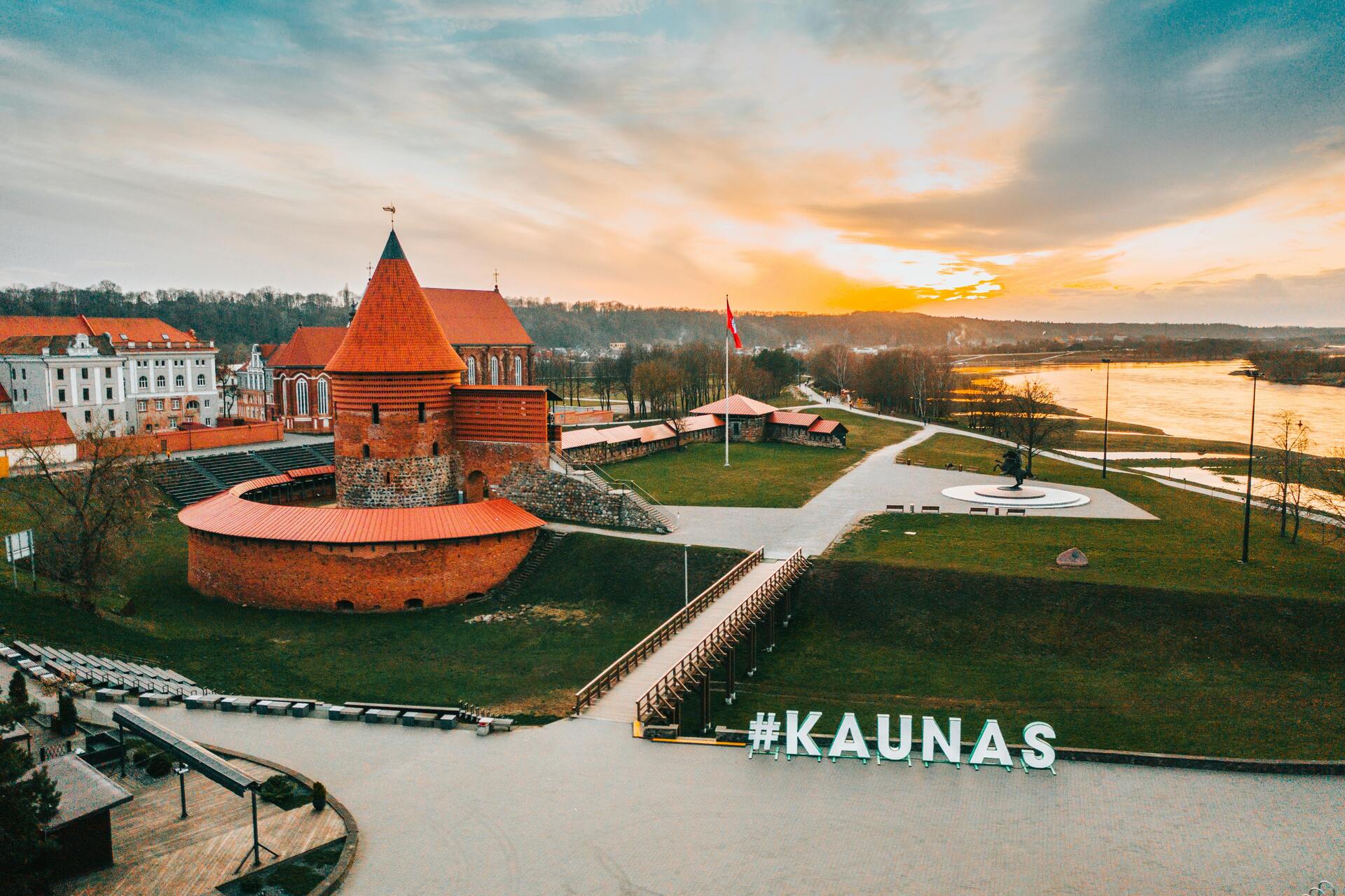
Lithuania is a modern, safe, and student-friendly country in Northern Europe, offering high-quality education at a relatively affordable cost. For Nepali students, it is an attractive destination for studying in Europe because it combines English-taught programmes, low tuition fees, reasonable living costs, and access to the Schengen region. At study abroad by Race Educare, we guide Nepali students in selecting the right university, preparing documents, and understanding the full admission and visa process for Lithuania.
Recognised European degrees that are valued across the EU and beyond.
Affordable tuition fees compared to many other European countries.
More than 500 English-taught programmes available across universities and applied sciences institutions.
Good location in Europe, giving you easy travel opportunities within the Schengen area.
Safe and welcoming environment with a strong student community.
Part-time work options available for international students, helping you manage expenses.
Lithuania offers a wide range of programmes that are suitable for Nepali students from different academic. backgrounds. Many of these programmes are available at Bachelor’s, Master’s, and Doctoral levels. Popular choices include:



These universities offer a strong academic environment, modern facilities, and a growing number of English-taught programmes.
Lithuania is known for being one of the more affordable study destinations in Europe.
| Tuition Fees | Living Expenses |
|---|---|
| Bachelor’s tuition fees: from around €1,300 per year | Living expenses: around €500–€800 per month |
Master’s tuition fees: from around €2,300 per year | |
| Doctoral programmes: from around €8,400 per year |
These costs usually cover accommodation, food, transport, study materials, and personal expenses. For Nepali families, Lithuania offers a good balance between affordability and quality education.
There are scholarship opportunities available for international students in Lithuania. These may include:
Scholarships are usually based on academic performance, programme choice, and university policy. We help you identify suitable funding options and strengthen your application.
You will usually need:
At Study Abroad by Race Educare, we support Nepali students throughout the entire journey to study in Lithuania:
Our goal is to make your study abroad journey simple, clear, and successful.
You can study all kinds of programmes both in terms of subject and degree. All of them are listed in the “Study Programmes” section.
All study programmes are taught in English.
The diploma you will obtain in Lithuanian university or school of applied science will be recognised everywhere in European Union.
For a Bachelor’s degree, you have to have a diploma of secondary education (school leaving certificate or corresponding document from your country certified by the Centre for Quality Assessment in Higher Education). For Master‘s degree, you must have a Bachelor’s degree in a relevant field of study, and if you want to do a PhD, you have to have gained Master‘s degree first.
For more information, please refer to “How to Apply” section.
What you must do first is figure out which university you want to study at and which study programme you wish to choose. Once you locate the programme you are interested in – you should directly contact the university that offers it and apply there.
For more details, please refer to “How to Apply” section.
Tuition fees at Higher Education Institutions in Lithuania vary depending on each institution, specific study programme and the academic stage the student is at.
For more information, please refer to “Tuition Fees” section.
Students of all fields, lecturers and researchers of foreign countries are eligible to apply for Lithuanian state scholarships. In most cases scholarships cover both – tuition fee and living expenses. Financial provisions depend on the home country of an applicant.
Also most Lithuanian universities offer scholarships from their own funds to students who satisfy the specified requirements. Interested students should apply to the specific Higher Education institution of their choice to find out if funding is available for their studies.
As a general rule of thumb, if you are a citizen of a European Union country – you shouldn’t need one. However, just to be safe, check the list published on the website of Ministry of Foreign Affairs of the Republic of Lithuania to find out for sure. If you are not a citizen of European Union – you must apply for a visa.
In order to study in Lithuania you need a National Visa (D) and a Temporary Residence Permit.
You must apply for National visa (D) before you come to Lithuania and for Temporary Residence Permit after you arrive.
You can apply for the visa at a visa center or embassy of the Republic of Lithuania. If there is no legal representation of the Republic of Lithuania in your country, you will have to travel elsewhere, where the Republic of Lithuania is legally represented.
For more information, please refer to “Visas and Permits” section.
If you are a citizen of one of the Member States of the European Union, Iceland, Liechtenstein, Norway or Switzerland and have a European Health Insurance Card, you are guaranteed state health care services in the case of an accident. You need to be aware that the card does not cover the expenses of health care services provided by the private sector.
If you are a citizen of a country outside the European Union, you must contact one of the insurance companies on Lithuanian Insurers Association (LDA) list. In order to study in Lithuania you must have a valid health insurance, covering the duration of stay, and its copy. The amount of medical insurance coverage is EUR 5792,40.
International students have the right to work while studying in Lithuania as long as they are enrolled in a Higher Education Institution. Students are allowed to work 20 hours per week in accordance with the legislation of Lithuania.
Students are granted individual visas ONLY. Your spouse and other family members may always apply for a tourist visa and visit you during your studies.